
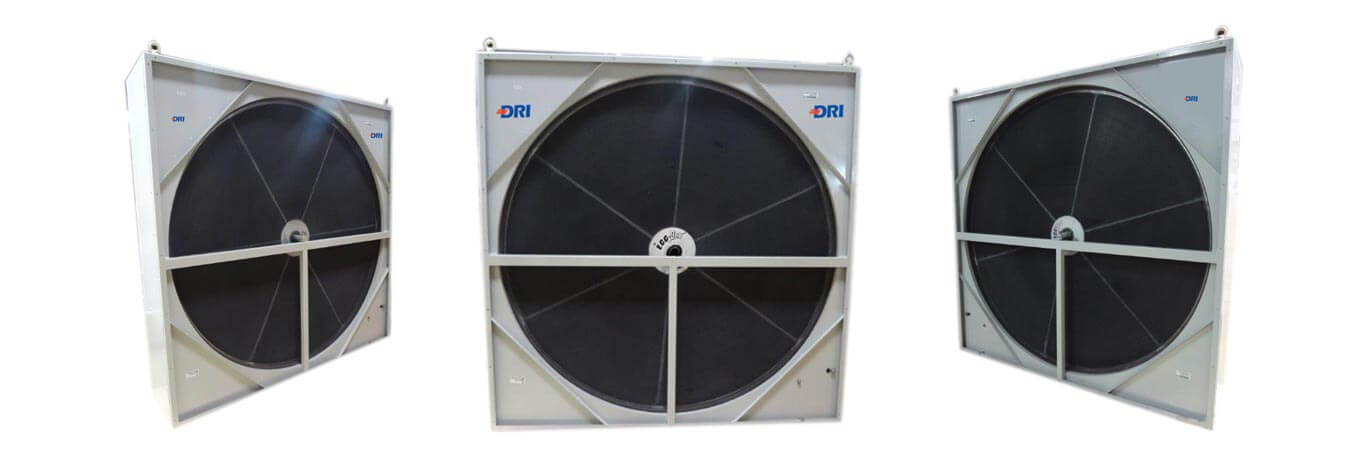
G3MA Passive Desiccant Dehumidification Wheels Patented
Achieve Optimum Dehumidification Without energy usage
Regenerates desiccant without additional energy usage
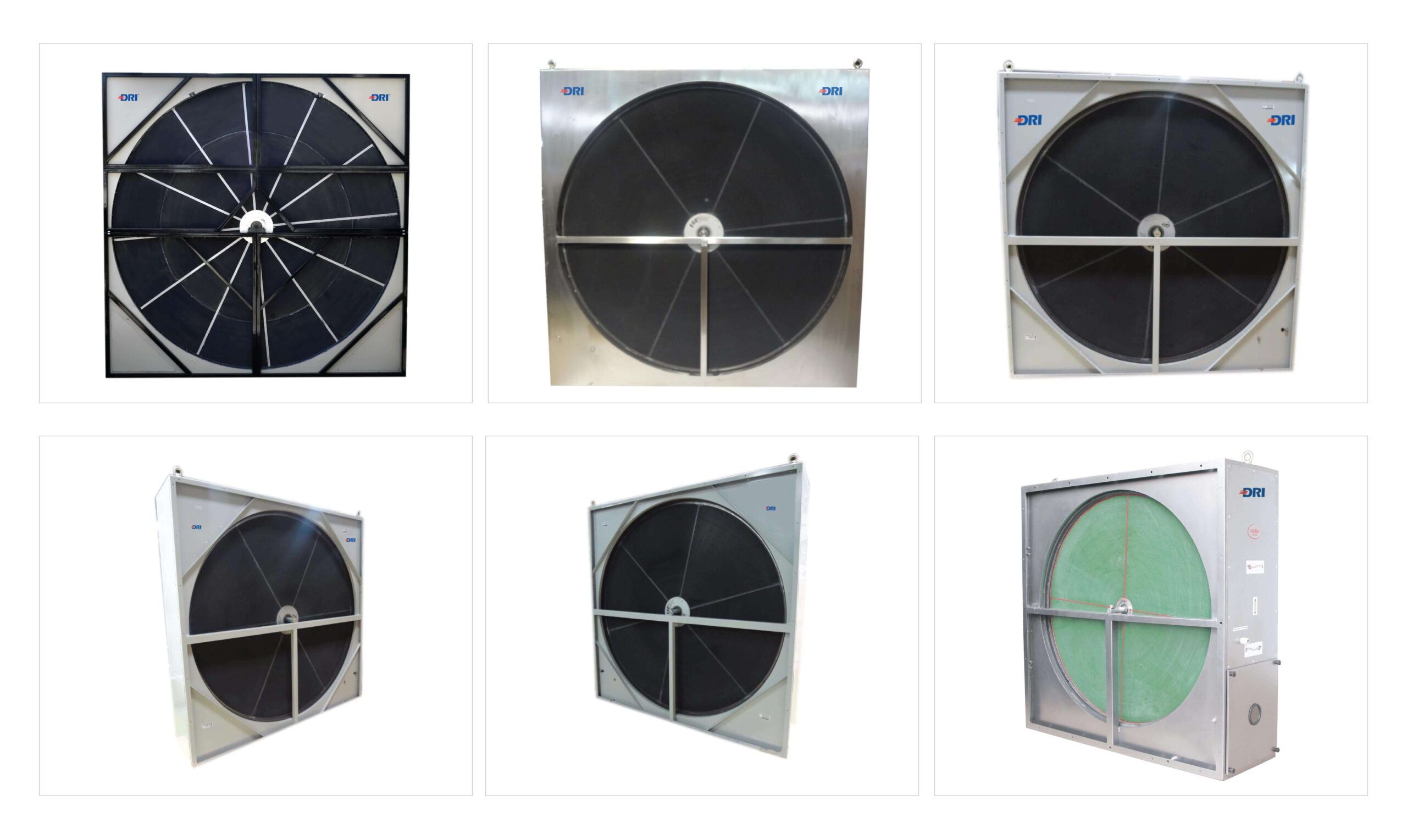
The unique G3MA "Passive" Desiccant Dehumidification Wheel (Patented) has the ability to be regenerated with the 50% RH room return air allowing for substantial moisture removal through dehumidification of the fresh air being supplied to the room.
DRI has established a reputation around the world for technology innovations and industry leadership in Fresh Air Treatment Products and Solutions which help maintain healthy IAQ (Indoor Air Quality) and also meet today's environmental challenges. DRI has played a pioneering role in innovating various new Fresh Air HVAC Systems. Our products are well suited to a wide array of applications in commercial spaces like hotels, hospitals, supermarkets, auditoriums, and all other conditioned spaces as well as conditioned manufacturing & processing areas like pharmaceuticals, food, electronics, etc.
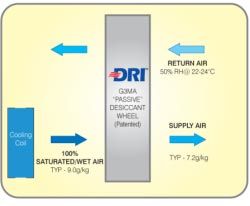
The DRI G3MA "Passive" Desiccant Wheel (Patented) does not require thermal heat for regeneration. The unique "Passive" Desiccant Wheel has the ability to be regenerated with the 50% RH room return air allowing for substantial moisture removal through dehumidification of the saturated (100% RH) Fresh Air being supplied to the room.
Yes. Passive dehumidification helps maintain optimal indoor humidity levels, reducing the risk of mould growth, condensation, and airborne contaminants while supporting healthier indoor environments.
Yes. A passive desiccant wheel provides reliable humidity control, making it suitable for pharmaceutical manufacturing, hospitals, laboratories, and other environments where moisture management is critical for product quality and occupant safety.
Yes. A passive desiccant wheel can be integrated into new or existing air handling units (AHUs) and ventilation systems to enhance humidity control while minimising energy consumption.
Absolutely. Passive dehumidification is particularly effective in tropical and coastal regions where high outdoor humidity can reduce HVAC performance and indoor comfort.
Yes. By reducing cooling energy demand and improving HVAC performance, a passive desiccant wheel can contribute to sustainable building designs and support green building certification programs such as LEED and IGBC.
Industries including pharmaceuticals, food processing, electronics manufacturing, data centres, healthcare, museums, archives, and commercial buildings benefit from passive dehumidification because it helps protect products, equipment, and indoor environments from excess moisture.
Fill in all the details. Our Team will verify your details & reply within 24 hours.